

When you're searching for a rehab program, you'll run into a lot of claims. "Evidence-based." "Compassionate care." "Life-changing." Every facility says some version of the same thing. So how do you actually tell the difference between a program that will support you and one that's just filling beds?
One answer is accreditation. Specifically, CARF accreditation. If you're looking for a CARF accredited rehab in Idaho, you're already asking a smarter question than most. This post breaks down what CARF actually means, why it matters for your safety and your recovery, and what to look for beyond the badge itself.
At Freedom Recovery, we earned CARF accreditation because we believe you deserve more than a program that just opens its doors and hopes for the best. Here's what that means for you.
CARF stands for the Commission on Accreditation of Rehabilitation Facilities. It's an independent, nonprofit organization that sets international quality standards for health and human services programs, including addiction treatment centers. When a facility earns CARF accreditation, it means outside reviewers came in, examined every part of the operation, and confirmed it meets rigorous standards for safety, ethics, and clinical quality.
The process isn't a one-time checkbox. CARF accreditation requires ongoing compliance and regular re-evaluation. A facility can lose its accreditation if standards slip. That accountability is exactly the point.
According to CARF International, accredited programs are expected to demonstrate measurable outcomes, transparent practices, and a genuine commitment to the people they serve. That's not a given in an industry where regulation varies widely from state to state.
Anyone can put "evidence-based" or "trauma-informed" on a website. Accreditation requires proof. A CARF survey team reviews clinical records, staff qualifications, client rights policies, safety protocols, and whether the program actually delivers what it advertises.
For you, this matters for a few concrete reasons. First, it protects your safety. Accredited facilities are held to standards for physical safety, staff training, and ethical treatment that unaccredited programs are not legally required to meet in Idaho. Second, it protects your investment. If you're using insurance, including Idaho Medicaid, many payers require or strongly prefer CARF accredited providers when determining coverage eligibility.
Third, and maybe most importantly, it gives you a baseline of trust when everything else feels uncertain. You're making a significant decision in a vulnerable moment. Knowing the program you're choosing has passed an independent third-party review removes at least one layer of doubt.
CARF accreditation is a floor, not a ceiling. It tells you a program is serious and accountable. It doesn't tell you whether that program is the right fit for you. Here's what to evaluate alongside it.
A full continuum of care. Recovery doesn't end when residential treatment ends. A strong program should offer a path from medical detox through inpatient, then into a Partial Hospitalization Program (PHP), Intensive Outpatient Program (IOP), and ongoing outpatient support. SAMHSA's Treatment Improvement Protocols consistently support step-down models that keep people engaged as they transition back to everyday life.
Qualified, credentialed staff. Ask who is actually delivering your care. At Freedom Recovery, our clinical team includes licensed clinicians, peer recovery specialists, and case managers, with over 30 years of combined experience in addiction treatment. Our Clinical Director, Timothy Palmer, is a Licensed Clinical Social Worker trained in Dialectical Behavior Therapy (DBT) and Neuro-Linguistic Programming (NLP). Credentials aren't just letters on a business card; they mean your clinician has met specific training and supervision requirements to practice safely.
Integrated mental health support. Research from the National Institute on Drug Abuse consistently shows that substance use disorders and mental health conditions frequently occur together. A program that only treats one and ignores the other is likely to miss the root of what you're dealing with. Look for programs that address both.
Case management. This is one that gets overlooked. Recovery doesn't happen in a vacuum. If you're coming out of treatment and still facing housing instability, legal concerns, or no transportation to appointments, the clinical gains you made are at serious risk. Our case management services at Freedom Recovery are integrated into every level of care, because life problems don't pause while you're in treatment.
Earning CARF accreditation isn't a background achievement for us. It shapes how we operate every day. Our programs are built on documented, measurable standards. Our staff maintain appropriate licensure and receive ongoing supervision. Our clients have formal rights, including the right to file a grievance if something isn't right, and we take those seriously.
We also hold LegitScript certification, which verifies that our admissions practices and advertising meet strict ethical standards. That matters in a field where predatory practices and patient brokering are real problems. You should be able to trust the program you're calling. We've done the work to earn that.
Our residential inpatient program runs for 60 days and includes individual therapy, group therapy, life skills training, and peer community support. From there, clients can step down through our IOP or PHP, into outpatient care, and into sober living if needed. The structure exists because lasting change requires time and support, not just a short stay and a wish of good luck.

If cost or coverage is a concern, that's a completely valid place to start. Many families don't even call a facility because they assume they can't afford it. Accreditation matters here too. CARF accredited programs are typically eligible for more insurance plans and are more likely to meet payer requirements for coverage approval.
Freedom Recovery accepts Idaho Medicaid and is in-network with most major insurance providers. If you're wondering whether Medicaid covers the type of treatment you need, our guide on Medicaid coverage for drug and alcohol rehab in Idaho walks through exactly what's covered and how to find out where you stand. Our admissions team handles insurance verification directly and will walk you through every step.
You can start the conversation without knowing any of those details yet. The first call is just a conversation.
If you're in eastern Idaho or anywhere in the region, and you're looking for a CARF accredited rehab you can trust, we'd encourage you to look past the badges and ask real questions. Ask who will be providing your care. Ask what happens after residential treatment ends. Ask whether the program accepts your insurance and what the plan looks like for your specific situation.
We're in Pocatello, and we serve people from across the state who are ready for real support and a real path forward. You can visit our admissions page to learn more about how the process works, or call us directly at (208) 626-6399. If you want to hear from people who have been through the program, see what our clients say about Freedom Recovery on Google. Recovery is possible. You don't have to figure out whether a program is trustworthy on your own.
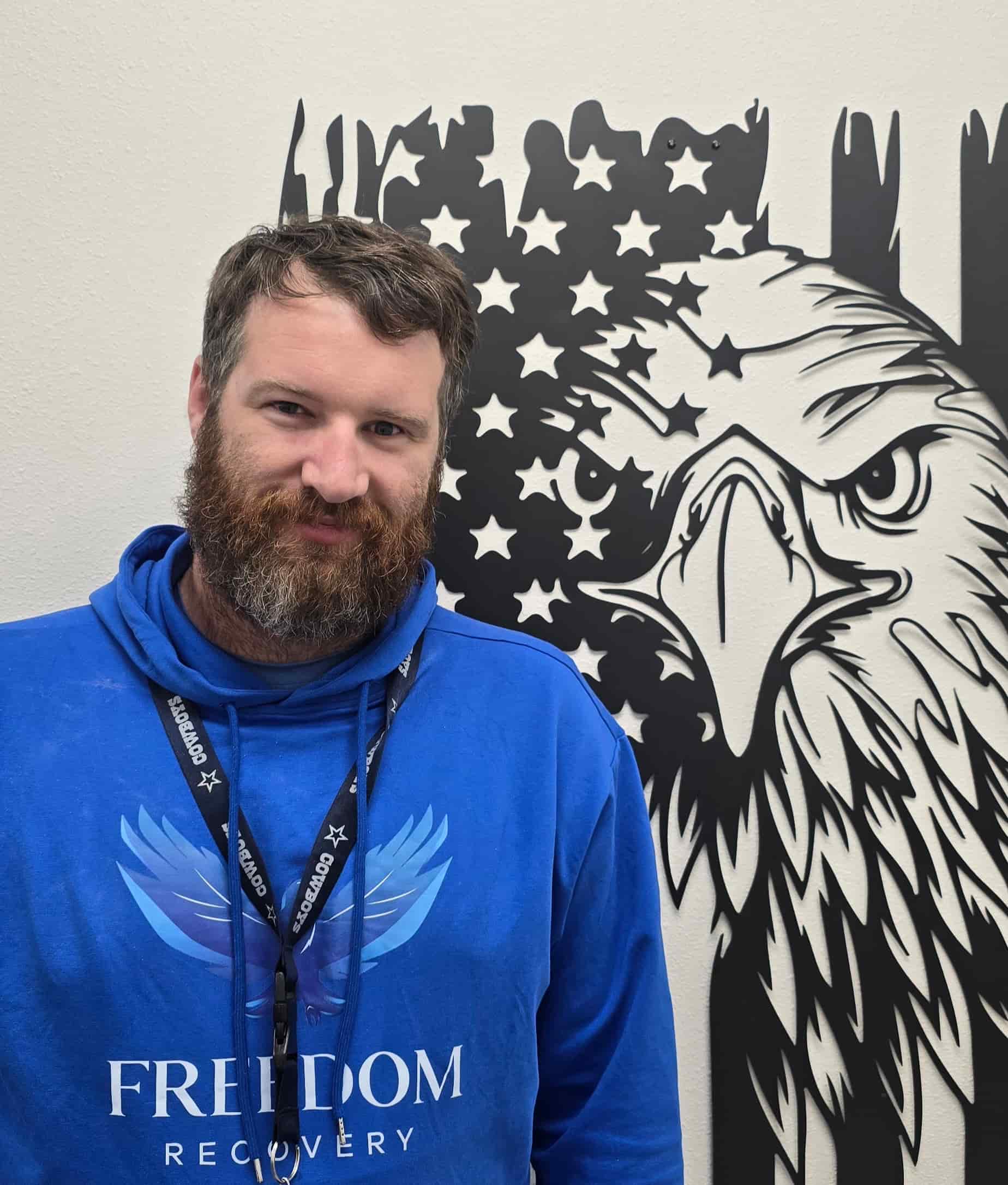
Timothy Palmer is the Clinical Director at Freedom Recovery with experience in general outpatient, correctional, and substance use disorder (SUD) treatment settings. He is trained in Dialectical Behavior Therapy (DBT), Neuro-Linguistic Programming (NLP), and has specialized experience working with Obsessive-Compulsive Disorder (OCD). His approach focuses on helping individuals build effective coping skills, improve emotional regulation, and create lasting change in recovery.

Andrea brings years of experience to the table. By day, she is conquering the world of search engines, and by night, she’s a dog lover, with an interest in tarot readings and all things witchy on a mission to explore the cultural gems of Mexico City.


Learn more about Vyvanse, its uses, the potential for addiction, and treatment options.
.png)
Discover how sober living vs inpatient rehab Idaho differ in structure and timing, and which level of care should come first in your recovery plan.

Discover effective coping strategies for managing PTSD and addiction, how to address both challenges, and how to find healing and recovery.


