.jpg)

If you’ve ever tried to stop using opioids, you know it’s not just about deciding to quit. Your body reacts fast — and you may experience aches, nausea, sweating, anxiety, and sleepless nights. Then the cravings kick in, and they can be intense enough to pull you right back in. MAT supports recovery by giving you medical support during this stage instead of leaving you to push through it alone.
Medication-Assisted Treatment (MAT) uses prescribed medications along with counseling to treat opioid addiction. In this article, you’ll learn how MAT works and why it can make long-term recovery more realistic and manageable.
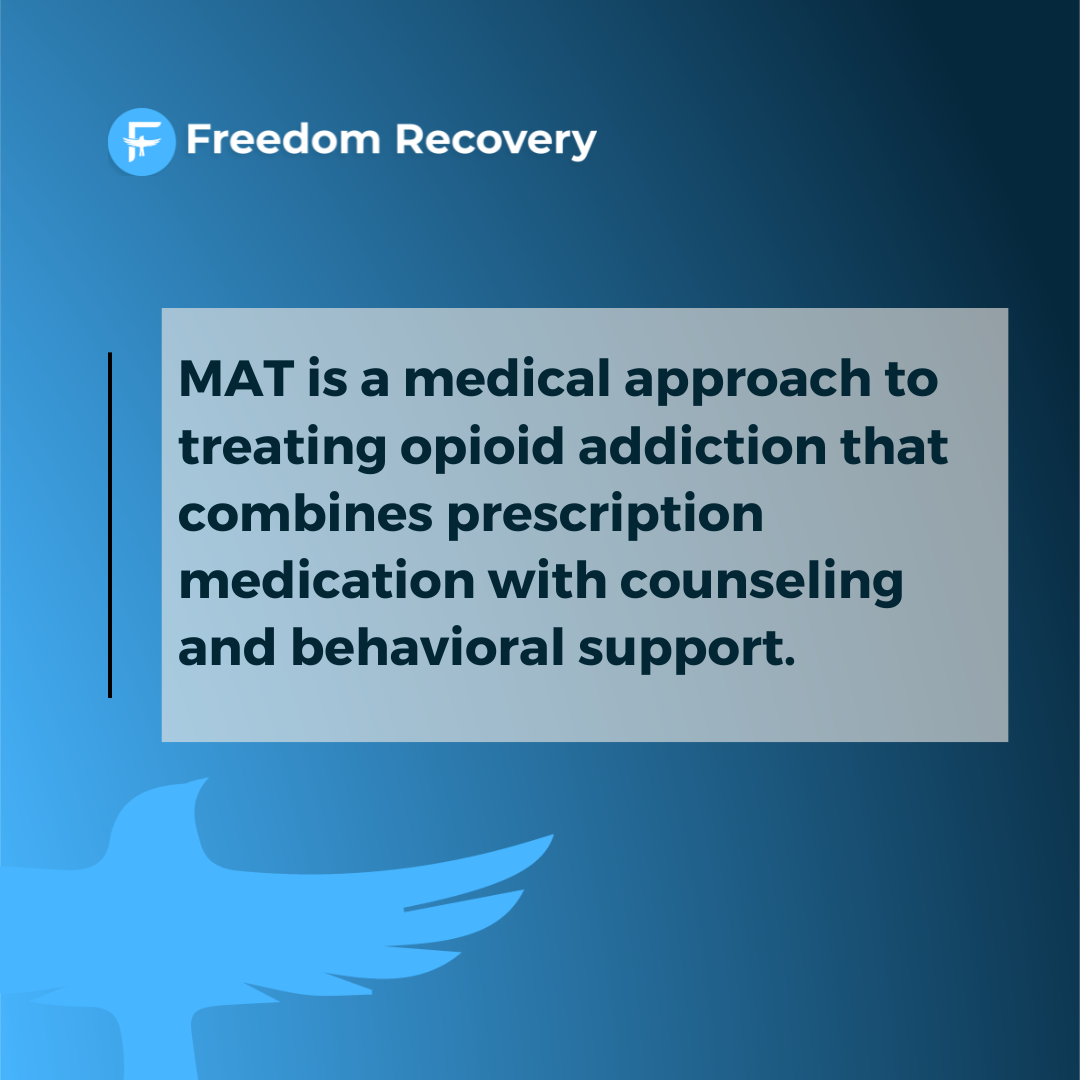
Freedom Recovery graphic explaining that medication-assisted treatment combines prescription medication with counseling and behavioral support to treat opioid addiction.”
At its core, MAT is simple: medication plus therapy. MAT is a medical approach to treating opioid addiction that combines prescription medication with counseling and behavioral support. Many addiction treatment Idaho programs use this model because it treats both the physical and psychological sides of addiction.
The medications most often used are buprenorphine, methadone, and naltrexone. Buprenorphine and methadone help reduce withdrawal symptoms and cravings by acting on the same brain receptors as opioids, but in a controlled and safer way. Meanwhile, naltrexone works differently, as it blocks opioids from attaching to those receptors.
Receiving MAT isn’t “replacing one addiction with another.”
Note that these medications are prescribed at stable doses and monitored by medical professionals. They don’t create the cycle of highs and crashes that fuel addiction. Instead, they help your brain stabilize so you can focus on recovery.
If you’re considering MAT in Idaho, it helps to understand what it actually does once you start. Here’s how it supports recovery.
Withdrawal is one of the biggest barriers to quitting opioids.
Symptoms like muscle pain, nausea, anxiety, and insomnia can start quickly and feel severe enough to derail your plans. Medications used in MAT are designed to ease those symptoms by stabilizing the same brain receptors opioids affect, without producing the same euphoric high.
When your body isn’t in constant distress, early recovery becomes manageable. Instead of focusing on how bad you feel, you can start focusing on appointments, counseling, and daily responsibilities.
This is one of the clearest ways MAT supports recovery: It removes the physical roadblock that keeps many people stuck.
Cravings don’t just disappear because you’ve decided to quit. They’re tied to changes in brain chemistry caused by long-term opioid use. MAT medications help reduce those cravings, making relapse less likely, especially in the early months of treatment.
Research backs this up.
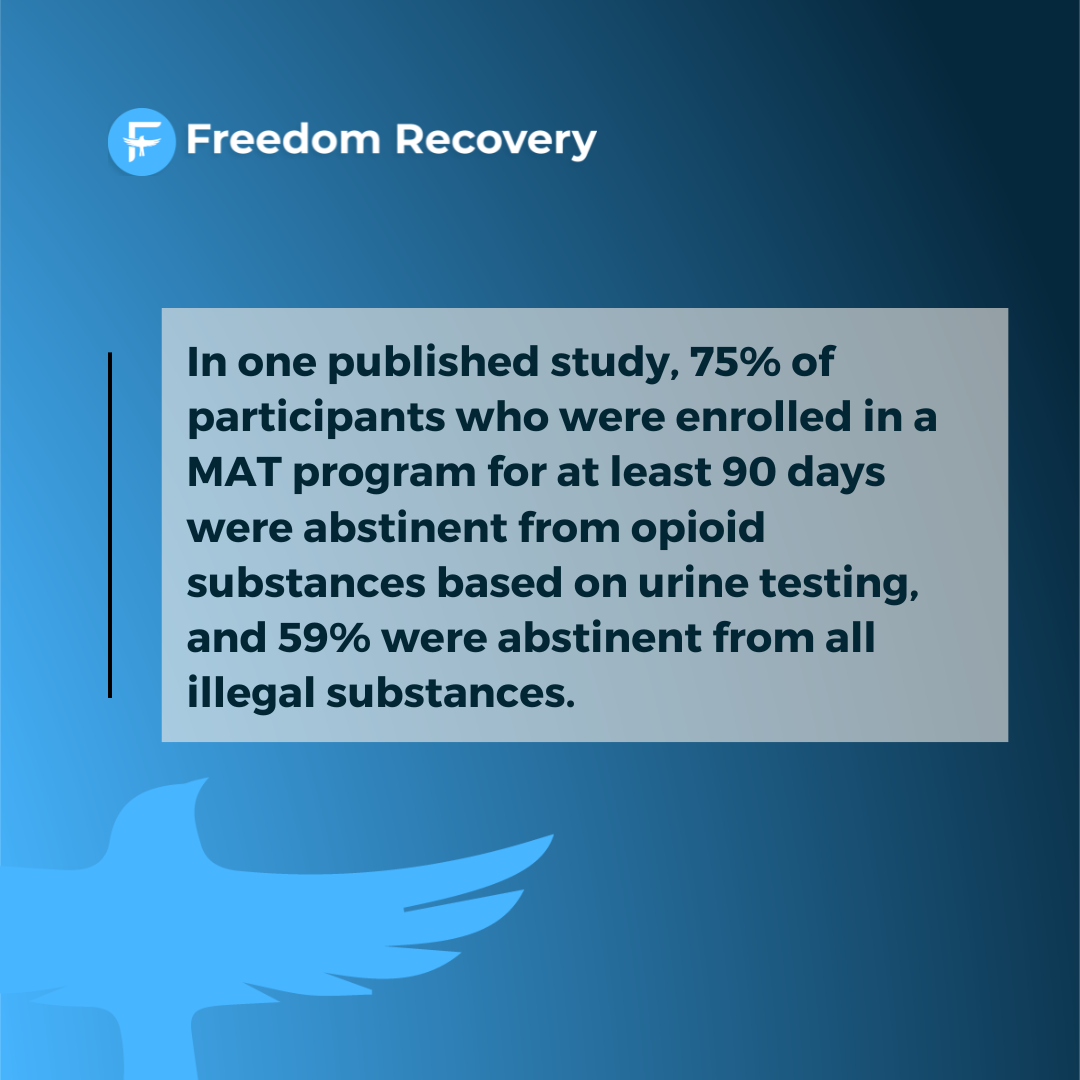
In one published study, 75% of participants who were enrolled in a MAT program for at least 90 days were abstinent from opioid substances based on urine testing, and 59% were abstinent from all illegal substances. For those enrolled for at least 365 days, 84% were abstinent from opioids and 62% from all illegal substances.
Addiction often brings instability: missed work, strained relationships, unpredictable moods. When withdrawal and cravings are under control, your daily life becomes more consistent. You’re more likely to show up for therapy sessions, keep a job, and rebuild trust with family.
That stability creates space for real change. You can focus on developing coping skills, addressing underlying mental health issues, and setting goals for the future.
Keep in mind, though: MAT doesn’t do the work for you, but it gives you a steadier foundation to do the work yourself.
If you’ve searched for an intensive outpatient program near me, you’ve probably seen that IOP is designed for people who need structured support but don’t require 24/7 residential care.
An intensive outpatient program typically includes several therapy sessions each week (both group and individual) while you continue living at home. You’re able to work, attend school, and care for your family, all while receiving consistent clinical support.
When you combine MAT with an IOP in Idaho, you’re addressing both the physical and behavioral sides of addiction at the same time. Medication helps stabilize withdrawal symptoms and cravings, while therapy focuses on triggers, coping skills, and long-term relapse prevention.
Here’s why that combination works:
Many addiction treatment Idaho programs integrate MAT in Idaho directly into outpatient services. That means your medical care and therapy are coordinated, giving you a more connected and supportive treatment experience.
MAT supports recovery for many people, but it isn’t one-size-fits-all. A medical provider will look at your history, current use, physical health, and treatment goals before recommending it. That said, there are certain situations where MAT can be especially helpful.
The most important thing to know is that treatment should be individualized. What works for someone else may not be the right fit for you. A qualified provider will build a plan around your needs, whether that includes MAT, therapy, outpatient care, or a combination of services.
When undergoing a MAT program, the first step is a thorough assessment. You’ll meet with a medical provider who reviews your substance use history, current health, and any mental health concerns. The goal here is to understand what’s going on so your treatment plan is built around your specific needs.
If MAT is recommended, you’ll begin medication management. That means starting at a carefully monitored dose and adjusting as needed. Providers track how you’re feeling, how well cravings are controlled, and whether any side effects show up. Regular check-ins help keep the medication working the way it should.
You’ll also participate in ongoing counseling. Therapy sessions help you work through triggers, stress, relationships, and habits tied to substance use. Throughout the process, your care is confidential and structured to support you. The focus stays on helping you move forward in a steady, sustainable way.
.jpg)
Opioid addiction is hard to overcome, especially when withdrawal and cravings keep pulling you back. Medication-Assisted Treatment gives you medical support during the toughest stages, reduces relapse risk, and helps you stay engaged long enough to make real changes. Simply put, MAT supports recovery by stabilizing your body and giving you the space to rebuild your life.
Looking for a qualified MAT provider? At Freedom Recovery, we can help you start moving forward with the right support in place. Reach out today!
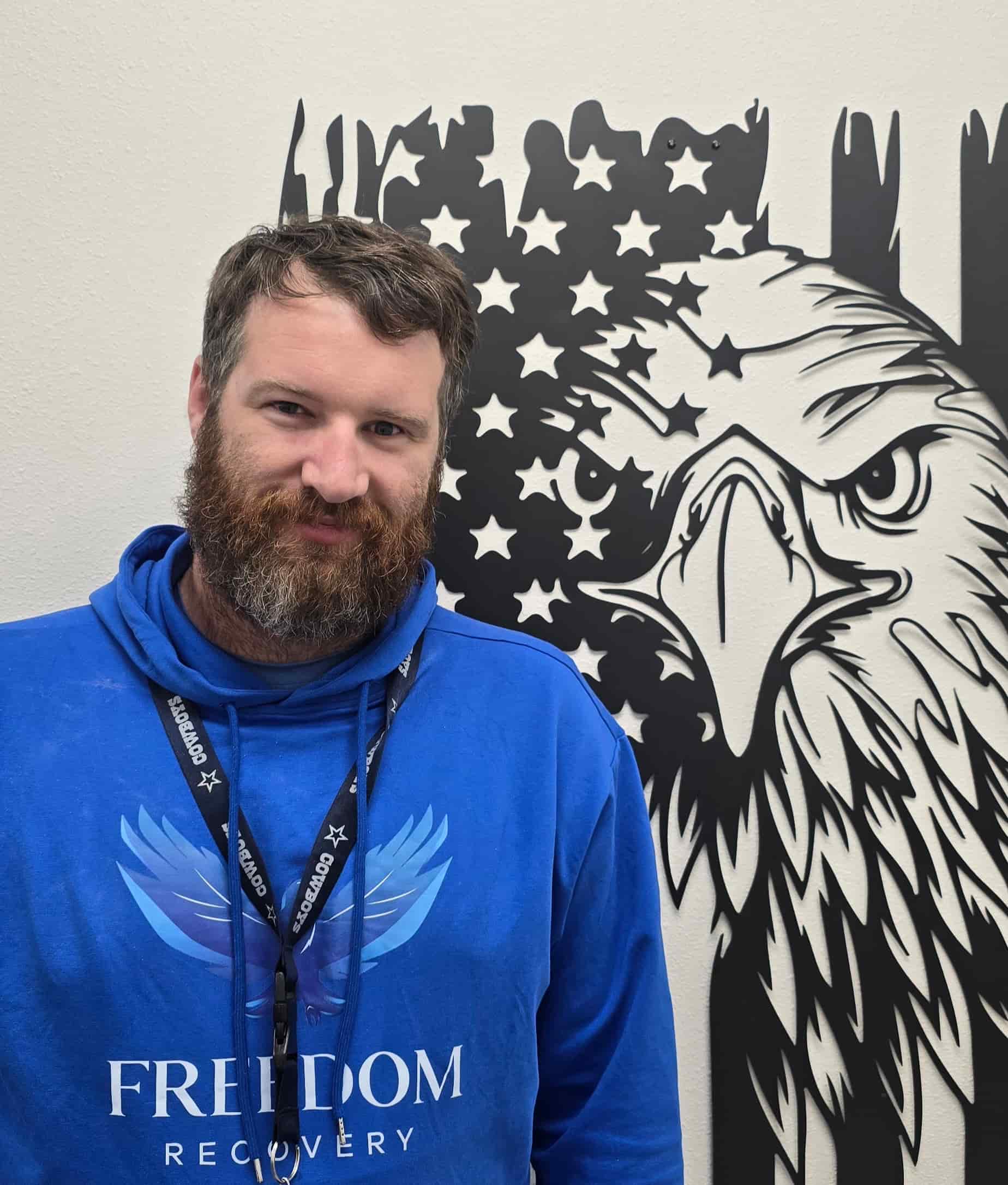
Timothy Palmer is the Clinical Director at Freedom Recovery with experience in general outpatient, correctional, and substance use disorder (SUD) treatment settings. He is trained in Dialectical Behavior Therapy (DBT), Neuro-Linguistic Programming (NLP), and has specialized experience working with Obsessive-Compulsive Disorder (OCD). His approach focuses on helping individuals build effective coping skills, improve emotional regulation, and create lasting change in recovery.

Emmy is a content specialist dedicated to helping brands boost their online presence and reputation. With expertise across diverse niches—including behavioral health—she crafts messages that resonate with target audiences and drive engagement.


Learn more about insurance coverage options for rehab and how to navigate the process.

Learn how Narcan (naloxene) works to combat opioid overdoses. Discover the science behind its life-saving potency and how you can use it effectively.

Discover how to navigate a drug addiction relapse and learn essential steps to strengthen your recovery.


