.png)

If you’ve been drinking heavily for some time, you might notice feeling constantly tired, dizzy, or short of breath. These can be signs of alcohol-related anemia, and enrolling in a residential inpatient program can help you manage it while supporting your recovery from alcohol dependence.
Structured treatment offers medical supervision, nutritional support, and lifestyle guidance to restore your health. In this article, you’ll learn what alcohol-related anemia is, how alcohol contributes to it, and how a residential program can support both your recovery and overall well-being.
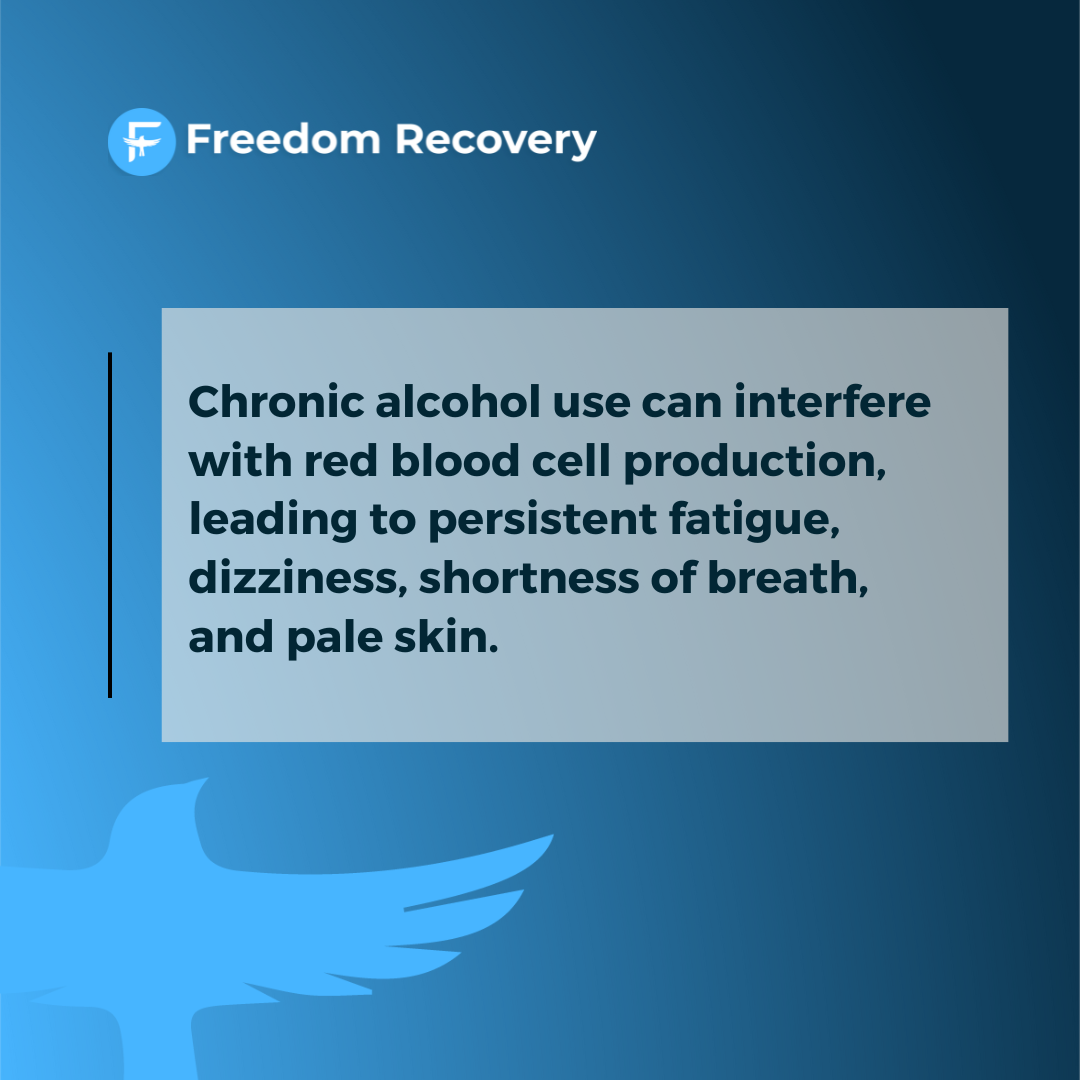
Anemia occurs when your body doesn’t produce enough healthy red blood cells to carry oxygen to your tissues.
Chronic alcohol use can interfere with red blood cell production, leading to persistent fatigue, dizziness, shortness of breath, and pale skin. Malnutrition, common among heavy drinkers, deprives your body of essential nutrients like iron, folate, and vitamin B12, while alcohol directly impairs bone marrow function.
Research confirms just how common this problem is among people with alcohol use disorder. For instance, a detailed study of 65 hospitalized patients with alcoholism found that 75% had a disorder of red blood cell production.

Alcohol affects your body in multiple ways that can cause or worsen anemia, often through a combination of nutritional deficiencies, organ damage, and blood loss. Understanding these factors can help explain why people with chronic alcohol use often develop fatigue, dizziness, and other anemia-related symptoms.
Comprehensive recovery programs, such as alcohol rehab Idaho, address these physical effects while providing structured support for sobriety.
It’s important that you seek professional care once you notice persistent fatigue, dizziness, or worsening anemia despite reducing alcohol use. Programs like alcohol and drug rehab Idaho can evaluate your physical health, manage anemia, and provide addiction support simultaneously.
A residential inpatient program provides structure and medical supervision to ensure both your alcohol recovery and physical health are prioritized. Additionally, such programs offer continuous monitoring and treatment for anemia and other alcohol-related health issues — all while providing nutritional counseling and supplementation to restore essential vitamins and minerals.
You can also gain access to specialized services, such as inpatient rehab Idaho and broader addiction treatment Idaho programs, ensuring comprehensive support for both recovery and long-term wellness. Moreover, care plans are personalized to balance medical needs with recovery goals, helping you rebuild your health while maintaining progress toward sobriety.
Recovery from alcohol use is about more than simply abstaining. In fact, it’s an opportunity to rebuild your body, restore energy, and address the health issues caused by chronic drinking. Residential and structured programs provide comprehensive support to help your body heal while promoting long-term sobriety.
After completing a residential inpatient program, maintaining progress is essential for long-term recovery and overall health. Step-down care provides a structured way to continue support while gradually reintegrating into daily life.
An intensive outpatient program or IOP in Idaho offers ongoing structure, therapy, and counseling to reinforce the skills learned during residential treatment. These programs help individuals stay accountable while balancing work, school, or family responsibilities.
Outpatient care also includes monitoring of anemia symptoms, nutritional counseling, and regular lab follow-ups to ensure physical health continues to improve. Continuity of care is critical for preventing relapse and sustaining gains in both sobriety and blood health.
Transitioning to step-down care allows individuals to maintain recovery progress while gradually returning to everyday responsibilities, providing a bridge between intensive treatment and independent living.

Alcohol-related anemia is a serious but treatable condition that directly results from chronic alcohol use, nutrient deficiencies, and impaired red blood cell production. Addressing both the physical effects and the underlying addiction is critical.
Residential inpatient programs provide structured care, medical supervision, nutritional support, and integrated counseling to restore health and support sobriety. By enrolling in a program, you can tackle anemia while building long-term recovery strategies, ultimately improving both your physical well-being and quality of life.
Want to combat alcohol addiction and the health issues that may come with it? Freedom Recovery offers the expert care you need. Contact our team today!
Timothy Palmer is the Clinical Director at Freedom Recovery with experience in general outpatient, correctional, and substance use disorder (SUD) treatment settings. He is trained in Dialectical Behavior Therapy (DBT), Neuro-Linguistic Programming (NLP), and has specialized experience working with Obsessive-Compulsive Disorder (OCD). His approach focuses on helping individuals build effective coping skills, improve emotional regulation, and create lasting change in recovery.

Emmy is a content specialist dedicated to helping brands boost their online presence and reputation. With expertise across diverse niches—including behavioral health—she crafts messages that resonate with target audiences and drive engagement.

.png)
Know what post-alcohol cessation fatigue is and why it happens. Learn strategies and professional support at alcohol rehab Idaho to regain energy safely.

Explore the science behind food addiction and how to make healthier choices.

Explore how court-ordered rehab programs can help you start recovery and reduce repeat offenses. Find trusted inpatient and outpatient options in Idaho.


